
Get your treatment with confidence
Our experienced team of specialized dentists ensures your safety and peace of mind, offering treatments based on the latest clinical protocols.
Prosthetic
Dental implants are the most stable and most modern way to replace teeth that have been lost. At our clinic, every implant restoration is planned after a thorough diagnosis and set out in a complete treatment plan, so the result stays stable, functional and natural for years to come.
Treatment is led by implantologist Christos Daras, who has specialized in implantology and oral surgery for many years. We take on straightforward cases, where a single tooth is missing, as well as more complex ones that call for restoring the whole mouth. Always with the same planning, and always keeping you fully informed.
Dental implants are one of the areas Daras Dental specializes in. We have been practising in Kato Patisia since 2000, and in Piraeus since 2023.
Through our prosthetic dentistry services, we cover every stage of implant treatment, from the diagnosis through to the finished tooth.

Dental implants are small titanium posts. They are placed surgically into the jawbone, where they take over the job of a natural tooth root. Titanium is biocompatible, which means the body accepts it rather than rejecting it. The prosthetic restoration is then supported on the implant. That is the part you see, and the part that works like a natural tooth.
A complete dental implant has two main parts:
Over time, the implant bonds with the bone. This process is called osseointegration, and it gives the artificial tooth the same stability as a natural one, if not more so. A properly placed dental implant lets you chew normally, speak clearly, and go about your day without thinking about it.
Implants are the answer when:
The sooner you deal with a tooth you have lost, the better. At the spot where the tooth is missing, the jawbone gradually starts to lose volume (bone resorption), and that can make placing the implant harder later on.
The right solution for you depends on how many teeth are missing, on the state of your bone, and on what you need. The main categories are:
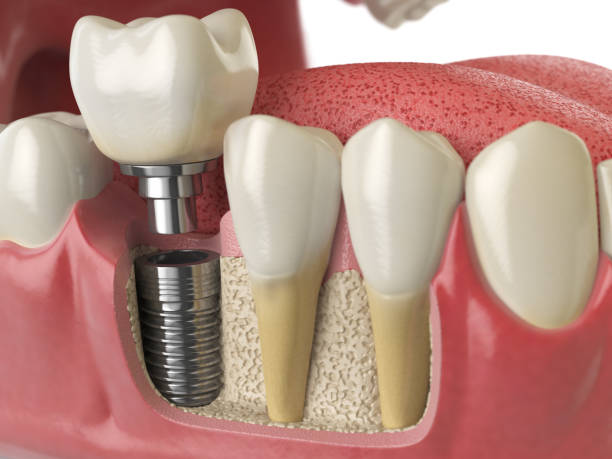
When people talk about a "screw-in tooth" in everyday conversation, they mean a tooth supported on an implant. Every modern dental implant works on the same principle: a biocompatible post is placed into the jawbone. There is no modern "screwless" alternative that has been shown to be safe.
What does change from one case to the next is the shape of the implant, the way it connects to the tooth above it, and how the whole thing is planned around your particular case.
Implant treatment is carried out in stages, and each one plays its own part in the final result.
At every stage we explain what happens next, so you know where your treatment stands and what to expect, both before and after each appointment at our practice.
At our clinic we use implant systems from internationally recognized manufacturers, carrying CE and FDA certification and backed by many years of clinical use. Which system we go with depends on where in the jaw the implant sits, on the quality of the bone, and on what the final restoration has to cope with.
The total price for restoring one tooth with an implant starts at €920 and covers:
If you go for a zirconia crown, the total price rises to €1,000.
The final cost comes down to what each case needs: the number of implants, the quality and the amount of bone available, and whether additional procedures are required, such as bone regeneration or a sinus lift.
After the clinical examination and the necessary diagnostic work, we draw up a detailed written treatment plan setting out every individual cost. We also talk through the payment options with you, so we can find an arrangement that suits you.
We want you fully informed and the costs out in the open, so that you know exactly what your treatment involves before anything begins.
To tell you precisely what your own case needs, we first have to examine you and look at your scans. You can book an appointment here.
If the implant is placed correctly, you keep up good oral hygiene and you come in for your regular check-ups, the implant will last for decades. Dental implants have more than 30 years of clinical follow-up behind them.
As with any medical procedure, placing an implant carries risks. The most common complications are inflammation caused by infection around the site where the implant was placed, and slow healing of the wound. We keep these risks down through:
Smokers, people with uncontrolled diabetes and people with active periodontitis run a higher risk of complications. In those cases we look at each person individually, to work out whether an implant restoration is the right choice, and on what terms.
The tooth that goes on top of the implant is the one replacing the tooth you lost. It can be made from a number of different materials, and each has its own strengths.
Zirconia is one of the most modern and most aesthetic options for restorations on implants. It looks natural, it lets light through the way a real tooth does, it contains no metal at all, and it is a material the gums take to well.
It suits the anterior region in particular, meaning the front teeth, and any case where appearance counts for more.
Metal-ceramic has been working reliably for many years and produces very good results.
It stays stable and stands up to chewing. It is often the more affordable choice of restoration as well.
Monolithic zirconia is exceptionally hard-wearing. That is why we choose it for areas that take heavy chewing forces, or for patients who grind their teeth (bruxism).
It is used mainly for posterior restorations, meaning the back teeth, and for extensive restorations covering the whole row of teeth (a full arch).
We decide on the material separately for each patient. It depends on:
Our aim is a restoration that looks natural, feels comfortable, works properly and lasts for many years.
The price abroad often looks lower, and you have most likely seen adverts quoting extremely low costs in countries such as Bulgaria, Turkey or Albania. In practice, though, at reliable clinics in those countries the difference does not go beyond 10% of the cost, because the price of the implants themselves cannot be brought down.
The total cost (travel, accommodation, follow-up appointments, dealing with complications) and the continuity of your care are both worth thinking through carefully. For patients from abroad who choose to have treatment in Greece, we coordinate all the appointments and the correspondence.
Price transparency
Every variant of this treatment with its exact price, as listed in the clinic's official price list, no rounding, no hidden ranges.
Read deeper

What You Need to Know About Dental Implants
From smoking to diabetes, the factors that decide whether an implant succeeds. See what really affects the outcome.
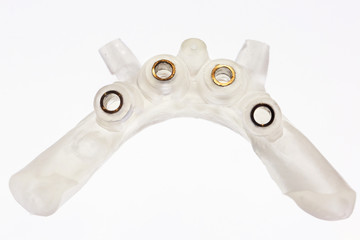
Surgical Implant Placement Guide
A smaller incision, less time in the chair and a predictable implant position. See what the guide gains you as a patient.
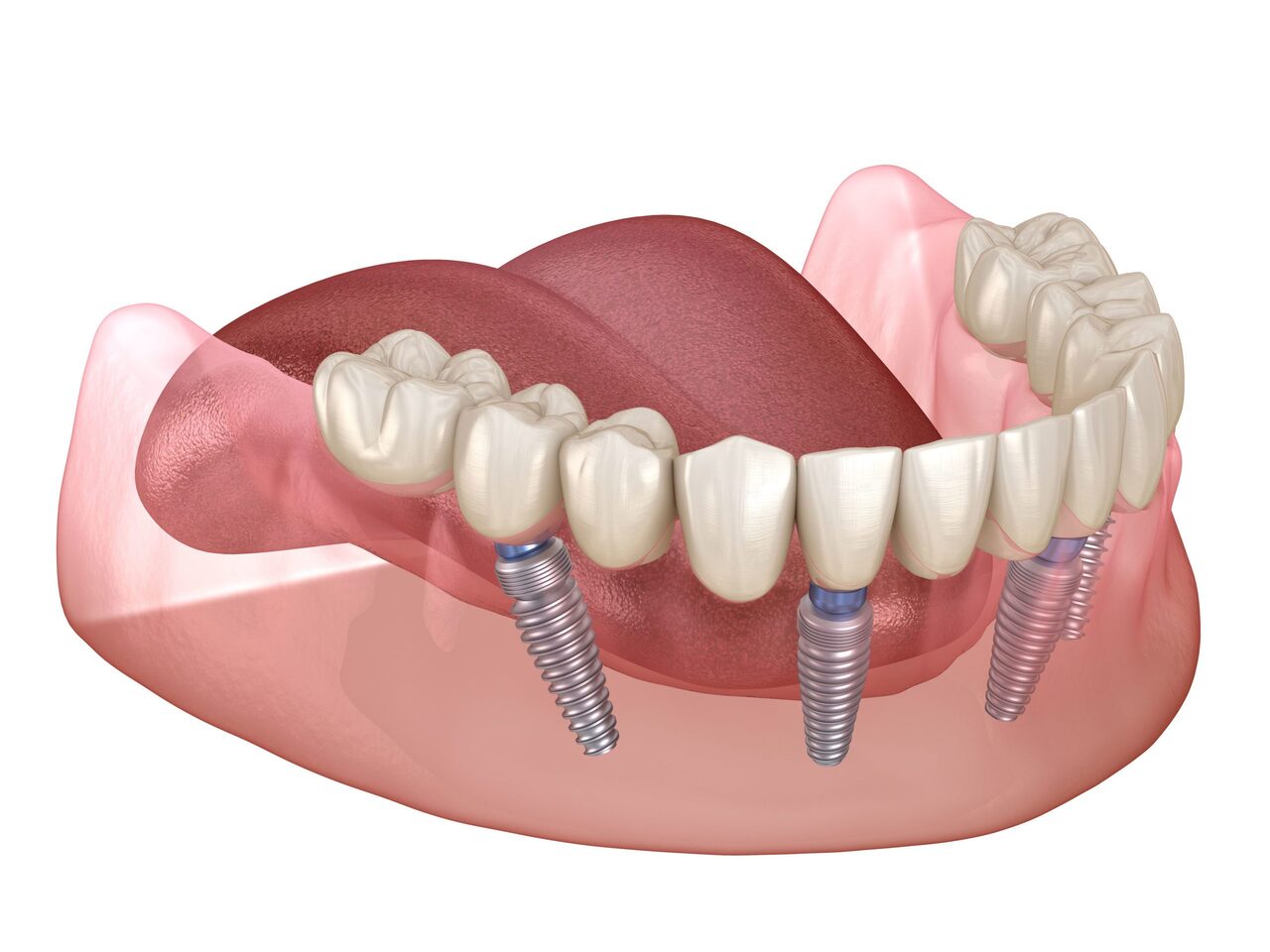
Dental Implants: All-on-4 Method
The All-on-4 method places implants at strategic angles to support a whole jaw. See how long treatment takes and the cost.

Taking Bisphosphonates and the Dentist
If you take bisphosphonates for osteoporosis, tooth extraction needs care. See the risks and what to tell your dentist.
Why patients choose us
Our experienced team of specialized dentists ensures your safety and peace of mind, offering treatments based on the latest clinical protocols.
Our clinics combine elegant design, advanced technology, and a welcoming atmosphere to make every appointment enjoyable.
Through innovative prosthetic and aesthetic dental treatments, we restore not only your oral function but also your confidence when you smile.
With two clinics, one in Kato Patissia and one in Piraeus, both just steps away from public transport, you can take care of your smile without hassle.